Artist role in K-Pop songwriting: Guide to creative autonomy
"The ability to create music provides an artist with a unique voice in a crowded industry."
The role of an artist in K-Pop often involves a transition from performer to creator, where songwriting and composing become central to their brand identity. This shift allows for deeper fan engagement and more sustainable career paths through original intellectual property.

Key takeaways include the importance of creative autonomy, the impact of digital distribution on global reach, and the strategic advantage of self-produced content in an evolving market.
How does the artist role in K-Pop change with songwriting?
At midnight in the dimly lit studio, the artist scribbles lyrics onto a crumpled page while feeling the warmth of the desk lamp.
A producer sits at a mixing console, adjusting levels to perfect a melody that will soon define a group's identity. As an artist role in K-Pop evolves, performers increasingly take charge of their own lyrical and musical directions to establish authenticity.
Moving beyond mere performance, self-writing K-Pop artists build a more cohesive brand by aligning their personal stories with their music. This creative control helps in differentiating themselves from purely manufactured acts.
A K-Pop singer composer role requires a balance of vocal talent and technical understanding to maintain high production standards.
What strategic choices do I face as a K-Pop producer? Artist role in K-Pop songwriting
At midnight in the quiet studio, the weary artist stares at a blank sheet of paper and feels the cool breeze from the open window. A songwriter stares at a blank sheet of paper, deciding whether to follow current trends or push a new sonic boundary. Making strategic choices K-Pop music producers face often involves deciding between immediate commercial success and long-term artistic credibility.
The market expansion via artist writing can lead to more diverse discographies that appeal to various listener demographics. For instance, the industry has seen massive shifts in how music is consumed and shared globally.
Such shifts require artists to be versatile in their creative output to remain relevant.
Can my own compositions help me expand my market? A digital artist uploads a track to a streaming platform, watching the global listener count rise across different time zones. The impact of self-composition on K-Pop often manifests in a stronger, more loyal fanbase that values the artist's unique perspective.

When artists write their own material, they can more easily navigate different cultural nuances. This capability is vital for global reach, as seen in the massive digital engagement figures reported in recent years.
How does cultural value of K-Pop creators impact the industry?
An artist performs on a grand stage, the lyrics they wrote resonating with thousands of fans in the audience. The cultural value of K-Pop creators is deeply tied to their ability to communicate universal emotions through specific, polished sounds.
This value helps in establishing a foothold in international markets where local tastes vary. By mastering composition, artists can tailor their sound to different regions while maintaining their core identity. This versatility is a key component of modern music business strategies.
What tools are necessary for a composer artist in K-Pop?
A musician sits in a studio, surrounded by synthesizers, MIDI controllers, and high-end monitors. A composer artist in K-Pop must be proficient in both traditional music theory and modern digital audio workstation software.
Developing these technical skills allows for more efficient production and better collaboration with professional producers. Mastering these tools ensures that the artist can maintain quality even when working remotely or under tight deadlines.
| Feature | Traditional Performer | Self-Writing Artist |
|---|---|---|
| Primary Focus | Vocal/Dance Performance | Creative Output & Identity |
| Brand Control | Low to Moderate | High |
I remember comparing the sheer volume of digital engagement to the depth of artistic control required to sustain it during my research.
How to transition into a songwriting role?
An aspiring artist sits at a desk, carefully transcribing a melody into a notebook. Transitioning from a performer to a songwriter involves a structured approach to learning the craft.
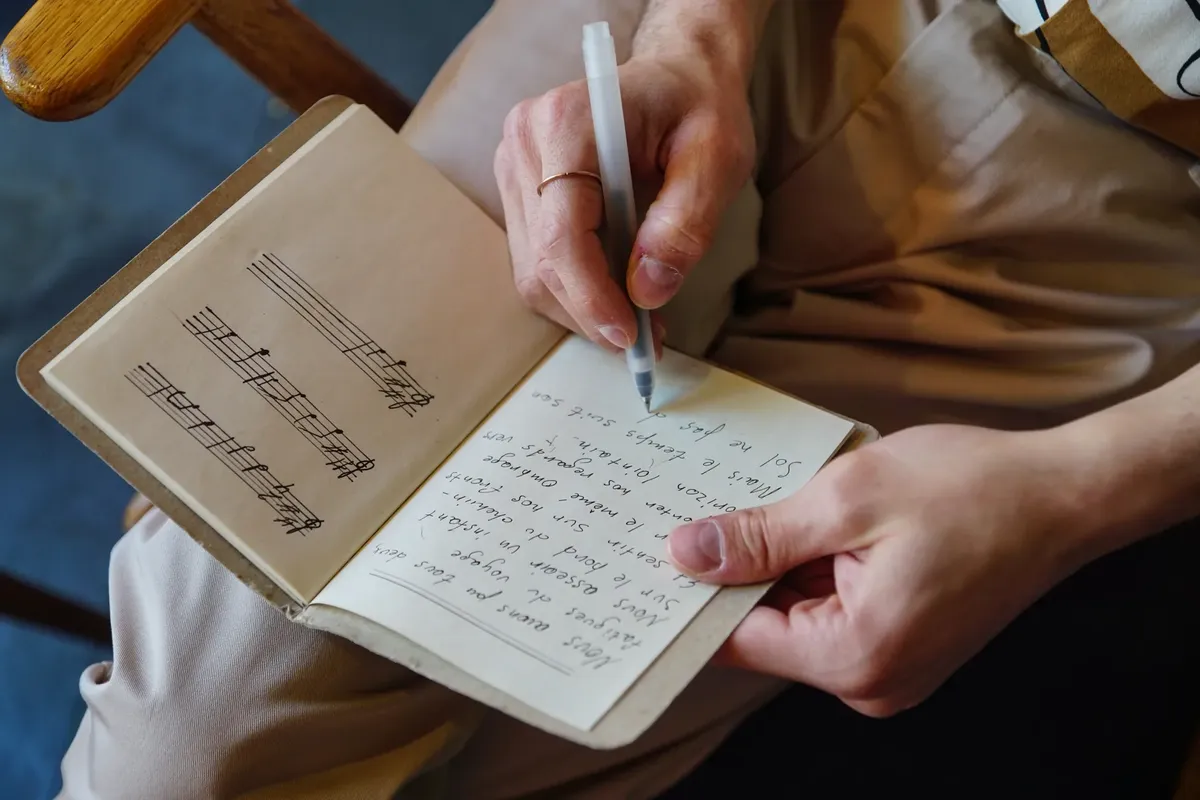
- Study music theory and basic composition techniques to understand the building blocks of melody and harmony. 2. Practice writing lyrics that reflect personal experiences while maintaining the group's overall concept. 3. Learn to use digital audio workstations to record and arrange demos independently.
A final check of the completed track against the intended emotional tone ensures the creative vision remains intact.
- How does the artist role in K-Pop change with songwriting?
- What are the strategic choices K-Pop music producers face?
- Can self-composition lead to better market expansion?
The subject here is Artist role in K-Pop songwriting.
The same subject is also called Self-writing K-Pop artist.
Related
- How will defining K-POP artist standards shape the industry?
- K-POP songwriter artist path: Why maintain public image
What are the conditions for successful self-production? 1. The artist must possess the ability to balance technical proficiency with artistic vision. 2. Maintaining creative autonomy while adhering to market demands presents a constant condition. 3. The artist needs to ensure their self-produced content resonates with the intended audience's cultural context.
This balancing act is critical because the ability to create music must serve both personal expression and commercial viability. Self-produced content offers a strategic advantage when the artist can meet these dual requirements.
The impact of self-composition is maximized when the artist successfully navigates these conditions.
Wikipedia: Impact and popularity of K-pop Based on the retained excerpt mentioning Warsaw Korean Culture Center: In Poland, the K-pop Star Exhibition was held in the Warsaw Korean Culture Center.






Comments 0